
The Future Was Never Ours
The assumption our lives are built on and what illness, grief and love reveal when it breaks

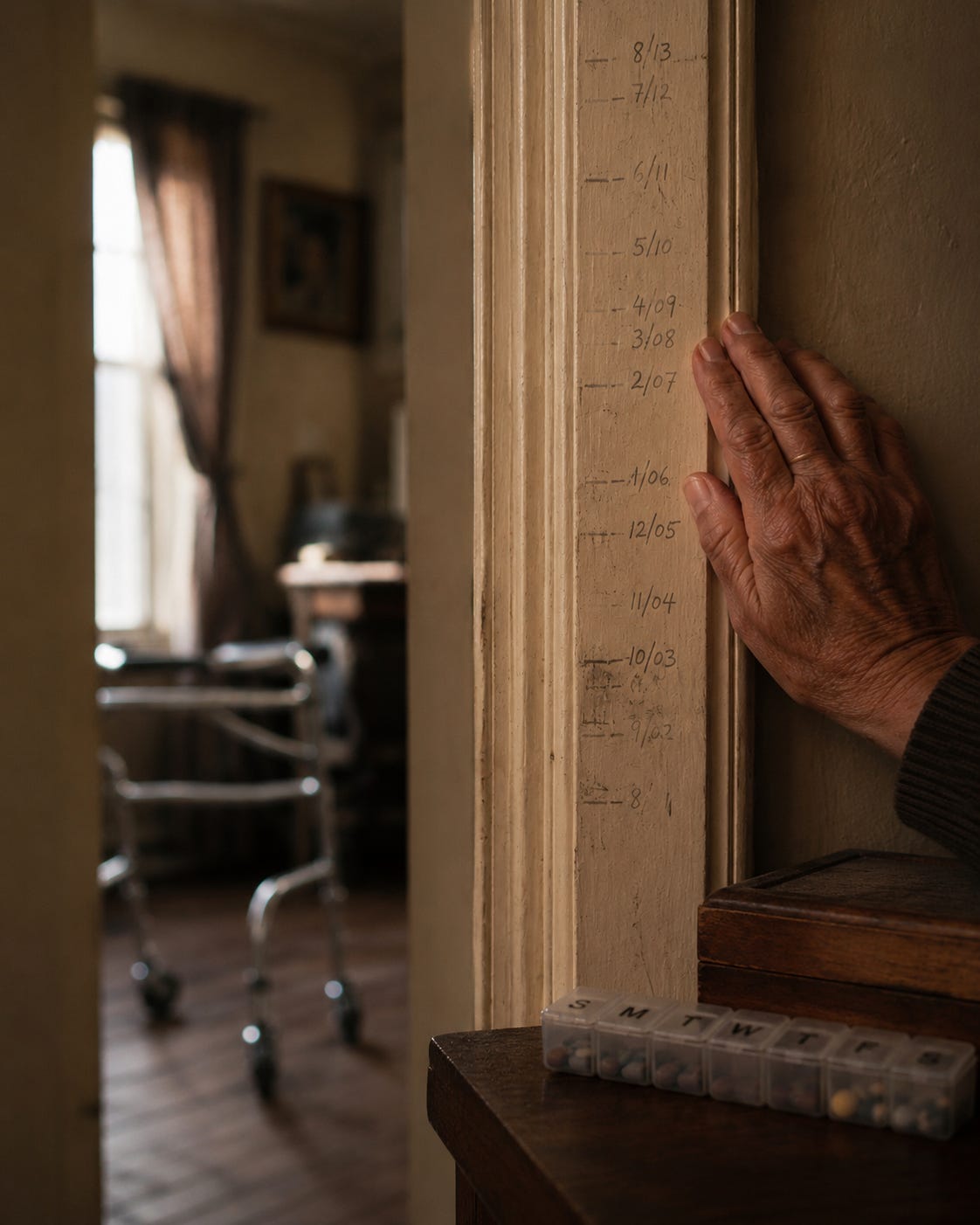
There is a particular violence in watching someone lose the future before they have left the world. It is different from death itself, though they live in the same room. Death has an awful bluntness to it. The loss of the future happens earlier, in smaller rooms, across kitchen tables, inside hospital corridors, during ordinary phone calls where everyone tries to sound normal because the alternative would split the room open. It happens when the language of life changes from plans to options, from months to maybe, from someday to if there is time.
A friend of mine is living inside that kind of sentence right now. I do not want to make a spectacle of his illness. I do not want to borrow his pain and turn it into something decorative. There is already too much of that in the world. Too much public tenderness arranged for applause. Too much grief positioned for an audience. Too much suffering converted into content before the body has even finished suffering. Pain and people deserve more respect than that. But not writing about it also feels dishonest. Some moments force a kind of attention. They ask you to look at the shape of your own life and notice how much of it has been built on an assumption you never earned.
We assume there will be more time. That is the whole structure beneath us. We rarely say it directly because it would sound absurd, but we behave as though it is true. We assume there will be another dinner, another drive, another birthday, another apology, another trip, another weekend, another ordinary afternoon so unremarkable that nobody thinks to be grateful for it while it is happening.
We make plans with the arrogance of people who have never signed a contract with tomorrow but keep spending from its account anyway.
Most of life depends on this illusion. Maybe it has to. Nobody can move through every hour with death sitting visibly at the table. Nobody can raise children, build a company, love a spouse, answer emails, buy groceries and keep staring directly at the fact that everything can be taken. Some denial is necessary. Some forgetting is mercy. If we remembered the full fragility of everything all the time, we would collapse under the weight of getting through Tuesday.
The danger is that forgetting becomes entitlement. We start to believe time belongs to us. That is where life becomes dishonest. We talk about the future like property. We say next year as though we have already been granted access. We say when things calm down. We say after this project. We say once the kids are older. We say after we have more money, space, control, energy, certainty and permission. We postpone the meaningful thing because the practical thing is screaming louder and because some part of us is terrified that if we slow down we will fall behind in life. We tell ourselves we are being responsible. Sometimes we are.
Sometimes responsibility is just fear wearing a decent shirt.
Then something happens. A doctor says something no one can unsay. A scan comes back wrong. A person you love gets a number attached to their remaining life. Six months. Maybe more if the treatment works. Maybe more if the study accepts him. Maybe more if they can afford the cost, travel, exhaustion and gamble. Suddenly time is no longer an atmosphere. It is a material and has weight and a price. It can be measured, negotiated, purchased imperfectly and still lost.
There is something obscene about that. Fighting for time is noble. It may be one of the most human things we do. But it is obscene that a life can be reduced to decisions like that. How much savings is a few more months worth? What do you spend when the thing you are buying is not recovery, but possibility? How do you put a number beside one more summer? One more conversation? One more chance to wake up next to the person you love?
Most of us never think this way until we are forced to. We live as if the future is an endless corridor and the rooms ahead are simply waiting for us to arrive. Then illness comes and shuts doors we had not even reached yet.
That is the part nobody prepares you for. The future is where identity lives. We are always becoming someone in the future. A better father. A better husband. A better founder. A better friend. A more patient person. A braver person. A person who finally says the thing, fixes the thing, finishes the thing, forgives the thing.
The future holds all our edited versions of ourselves.
The father we still intend to become. The husband we swear we will be once things settle down. The friend we promise we will call next week. The version of ourselves that finally gets it right. It is where we store our unfinished courage. So when the future is threatened, it is not only time that disappears. It is every imagined self that depended on that time.
That is why grief begins before death. People think grief starts at the funeral, but anyone who has watched illness move through a life knows that grief arrives much earlier. It arrives when you see someone’s body become unfamiliar. It arrives when the house starts organizing itself around medication and appointments. It arrives when laughter is still possible, but innocence is gone. It arrives when a couple that should be arguing about stupid furniture or vacation dates is suddenly talking about wills, hospital beds, savings accounts and what happens if the treatment fails. It arrives when love has to become logistics.
That may be the cruelest transformation of all. Love should be allowed to stay useless sometimes. It should be allowed to be dinner and bad jokes and lying around and making fun of each other and small errands and old stories. But crisis turns love into work. Necessary work. Sacred work, maybe. Work nonetheless. Forms, calls, bills, treatment plans, second opinions, rides, schedules, insurance, fear management, family updates, emotional triage. The person still loves you, but now they also have to manage the machinery around your survival.
I saw a piece of that today through his wife. She is strong in the way people become strong when they are not given another option. I do not like romanticizing that kind of strength. Some strength is not inspirational. Some strength is exhaustion that has learned how to stand upright. She has been living inside the daily reality of this, carrying the practical and emotional wreckage of it, while the rest of the world continues making lunch reservations and complaining about traffic.
That is another strange cruelty of grief. The world does not pause. It should, but it does not. The sun comes up with offensive regularity. People send calendar invites. Someone asks if you watched the game. The parking meter still wants payment. Your inbox still fills up. The normal world keeps moving around the abnormal and you realize normal life is indifferent.
And yet, inside all that indifference, there are these small moments that feel almost holy because they are not dramatic at all. A lunch. A FaceTime call. A text later that evening saying she was happy and that made him happy. A simple message from a man facing something enormous, thinking not first of himself, but of the relief his wife felt for a few hours. That is the kind of thing that can ruin you if you let it in fully. It reveals what love looks like when everything ornamental has been stripped away.
Love is attention under pressure.
It is noticing whether someone you love had a better afternoon. It is being grateful that they laughed. It is finding comfort in their comfort, even when your own body is betraying you. It is wanting the person who is suffering beside you to suffer a little less, even if you cannot spare them from the whole thing. That kind of love is almost too much to look at.
It also makes the usual machinery of life feel ridiculous. Work matters. Money matters. Ambition matters. The things we build matter. I believe that. I have built too much of my life around making things, shaping things, trying to turn vague instinct into something real, to pretend otherwise. But there are moments when the hierarchy gets rearranged. The fog lifts for a second and you can see the difference between what is urgent and what is worth your life.
Much of what humiliates us, distracts us, enrages us and keeps us awake at night is not worth the hours it takes from the people who would sit beside us in the hospital.
That does not make ambition wrong. It means ambition needs proportion. Work can be meaningful. Building can be meaningful. Recognition can even be meaningful when it is attached to something true. But none of it can carry the full weight of a life.
The world will applaud you and still not know what to do with you when you are afraid.
The market will reward you and still not hold your hand. The people scrolling past your achievements will not be there at three in the morning when the scan results come back. We know this, but we do not live like we know it. We keep mistaking motion for meaning. We keep sacrificing the people who love us for the approval of people who are barely paying attention.
Then illness enters the room and exposes the fraud. It shows you what remains when the stage lights go out. Usually, it is not the crowd. It is a handful of people. A spouse. A friend. A child. A sibling. Someone who knows the unedited version of you and stays anyway. Someone who does not need your mythology. Someone who is not impressed by your costume. Someone who will bring food, answer the phone, sit in the awful chair and refuse to make your pain about their own performance of goodness. That is the real wealth.
Money still matters. It matters brutally in moments like this. Anyone who says otherwise has either been lucky or insulated. Money can buy options. Money can buy time, or at least the attempt at time. Money can reduce certain forms of humiliation. It can create access. It can soften the edges of catastrophe. It cannot defeat mortality, but it can change the conditions under which we meet it.
So this is not some sentimental argument against wanting to succeed. Success matters. Security matters. Savings matter. Health insurance matters. The material world matters because bodies live in it. But the material world is not the same as a life.
A life is the people who would bankrupt their comfort for a chance to keep you here.
A life is the person whose happiness still reaches you through your own fear. A life is the ordinary lunch that becomes important because someone needed one day that did not feel like a medical file.
I keep thinking about how easily we miss those days. We are trained to notice peaks. Weddings, births, launches, awards, funerals, diagnoses. The large events announce themselves. They demand a response. Most of what matters arrives disguised as routine. The child asking you to play when you are tired. Your wife saying something from the other room. A friend checking in. The stupid errand you run together. The drive where nobody says anything important, but everyone is alive and close enough to reach. That is the material. That is the thing we will want back. We will want back the messy, unremarkable, living texture of it all. The sound in the kitchen. The shoes by the door. The person breathing next to us. The unfinished conversation. The ordinary morning we treated like a bridge to somewhere else.
Maybe that is what maturity really is. Not the accumulation of achievements, but the ability to recognize the sacred while it still looks ordinary. Children understand this better than adults. They do not care about the architecture of your ambitions. They care whether you are on the floor with them. They care whether you listened to the strange story they invented. They care whether you looked up. To a child, presence is not an abstract virtue. It is the whole world. You are either there or you are not.
Adults invent complicated reasons for not being there. Some of those reasons are real. Some are necessary. Some are cowardice with better branding. I know this because I have used them.
I have told myself I was building for my family when I was also hiding inside the build. I have told myself certain pressures were unavoidable when the truth was that I had allowed them to become normal. I have confused being needed professionally with being useful personally. I have answered things quickly that deserved to wait, and delayed things that deserved the best of me.
That is uncomfortable to admit, but it is probably the point. Mortality is only useful if it tells the truth. Otherwise it becomes another aesthetic. The truth is harsher than that.
Life is not short in the abstract. It is specific. It is this dinner. This call. This person. This child. This body. This Tuesday. This afternoon you will never get again.
We make it abstract because abstraction protects us. Specificity indicts us. It is easier to say life is fragile than to call the person you have been avoiding. It is easier to post about gratitude than to change the way you move through your own house. It is easier to admire courage than to have the conversation you keep postponing. It is easier to mourn beautifully than to love properly while there is still time. And maybe that is where the real work is.
Not in becoming someone who thinks about death constantly. That is not wisdom. That is paralysis. Most people think mortality teaches urgency. Sometimes it does. But the deeper lesson is proportion. Not everything deserves the same weight. Not every problem deserves residence in your mind. Not every ambition deserves another hour stolen from the people waiting for you downstairs.
The work is to let it shrink the stupid things and enlarge the things we keep treating as background. To let it remind you that the people in your life are not permanent fixtures in the room. They are living beings on their own temporary loan from the same unknown source. They are not guaranteed to you. You are not guaranteed to them.
This should make us softer, but not weaker. More serious, but not grim. More loving, but not theatrical. It should make us harder to manipulate by trivial things. Harder to seduce with empty applause. Harder to pull away from what matters. There is a discipline in remembering death correctly. As a proportion. Because the future was never ours. That is the sentence I cannot get away from.
The future was was not promised to my friend. It is not promised to his wife. It is not promised to me, or to my children or to anyone reading this. We are all living inside an arrangement that can change without our consent. That is not pessimism. That is reality. And reality, when faced honestly, does not have to make life smaller. It can make life more exact.
It can make you less willing to waste love. Less willing to postpone repair. Less willing to perform indifference. Less willing to spend your best hours on things you would not care about from a hospital bed.
The strange mercy is that we do not need a perfect life to live this way. We do not need to quit everything, move to the woods, become saints, or pretend ambition no longer matters. We only need to stop treating the ordinary as disposable. We need to stop assuming the people we love will still be there when we finally become available. We need to stop confusing delay with patience. We need to stop calling it timing when it is really avoidance.
There are people in our lives who should hear from us before the emergency. There are apologies that should not require a diagnosis. There are dinners that should be scheduled before the funeral. There are children who should not have to compete with a phone for the attention of the person they love most. There are marriages that should not have to become endangered before they become tender. There are friendships that should not be maintained only through crisis. This is the hard part. The lesson is obvious. Living it is not.
Because tomorrow seduces us. It always has. Tomorrow says there is still time. Tomorrow says you can fix it later. Tomorrow says real life is coming once the current pressure passes.
Tomorrow is patient, persuasive and completely unreliable.
Today is less glamorous. Today is usually inconvenient. Today has bills and tiredness and traffic and children melting down and work that needs finishing and bodies that do not feel the way they used to. Today rarely feels profound while we are inside it. But today is the only place love can actually happen.
That is what illness reveals. That is what grief teaches badly and love teaches better. We do not get to choose how much time we receive. We only get to choose whether we are awake inside the time we have.
I hope my friend gets more time. I hope the treatment works. I hope the study gives him something the first rounds could not. I hope he gets more dinners, more laughter, more ordinary days with the woman he loves. I hope he gets the kind of miracle that does not need to be explained because everyone is too busy being grateful. But hope is not control.
So I am trying to let this moment do what painful moments are supposed to do when we do not turn away too quickly. I am trying to let it reorder me. Not dramatically. Not publicly. Just honestly. To look at my wife and children with less assumption. To answer the text. To make the call. To stop saving tenderness for some imagined later version of my life where I am less tired, less busy, less afraid, less unfinished. Because that version may never arrive. And even if it does, the people I love should not have to wait for him.
The future is not a possession. It is not an entitlement. It is not a room we have already paid for. It is a door that may open, if we are fortunate, for one more day. And if it opens, the only decent thing to do is walk through it with a little more reverence than we did before.
The observations that "responsibility is just fear wearing a decent shirt" and that we store all our "unfinished courage" in an imagined future self are piercing. Thank you for having the courage to write about this heavy reality with the profound reverence your friend's pain deserves.
Wow this so honest and amazing. Tomorrow says you can fix it later. 👏